
OEM & Wholesale
How to Evaluate an Outdoor Sauna Wholesale Programme
Evaluate an outdoor sauna wholesale programme through model coverage, repeatable specifications, packing consistency, dealer support and evidence.
Quick answer
An outdoor sauna wholesale programme should be judged on repeatability. Can the supplier identify each model and size, quote the same configuration more than once, show the package data behind the freight plan, keep inclusion schedules consistent and provide product-specific documents? Those questions matter more than a single catalogue image.
Start with the outdoor sauna range, then apply this checklist to the supplier and to the proposed wholesale programme.
Does the range cover real customer briefs?
List the footprints, quantities and use cases your business expects to sell: compact residential, villa, resort, spa or dealer showroom. Map them to documented room sizes rather than selecting models by appearance alone.
The catalogue should make the size logic visible. SIP-SQ documents seven sizes on one canonical page; SIP-LY documents a 260 × 150 × 210 cm room; SIP-WG records two sizes. A useful wholesale programme explains how those families differ and which fields still need confirmation.
Are specifications repeatable?
Ask for a controlled sell sheet or product page with the SKU, room dimensions, package dimensions, weights, timber options, stove type, accessory scope and lead time. If a dealer creates an order from that sheet, the supplier should be able to reproduce the same baseline.
Watch for copy that mixes data from multiple sizes. A variant table or unique-room pricing is preferable to one generic set of dimensions used for every option.
Is timber described consistently?
Spruce, hemlock and red cedar appear across applicable products. A wholesale programme should identify which options belong to the selected model and how the buyer can approve a finish. If appearance samples or current photographs are available, state what they represent.
Avoid treating a timber species as a complete construction specification. Wall, base, roof, glazing and hardware details must be confirmed separately where documented.
Does the programme explain outdoor protection?
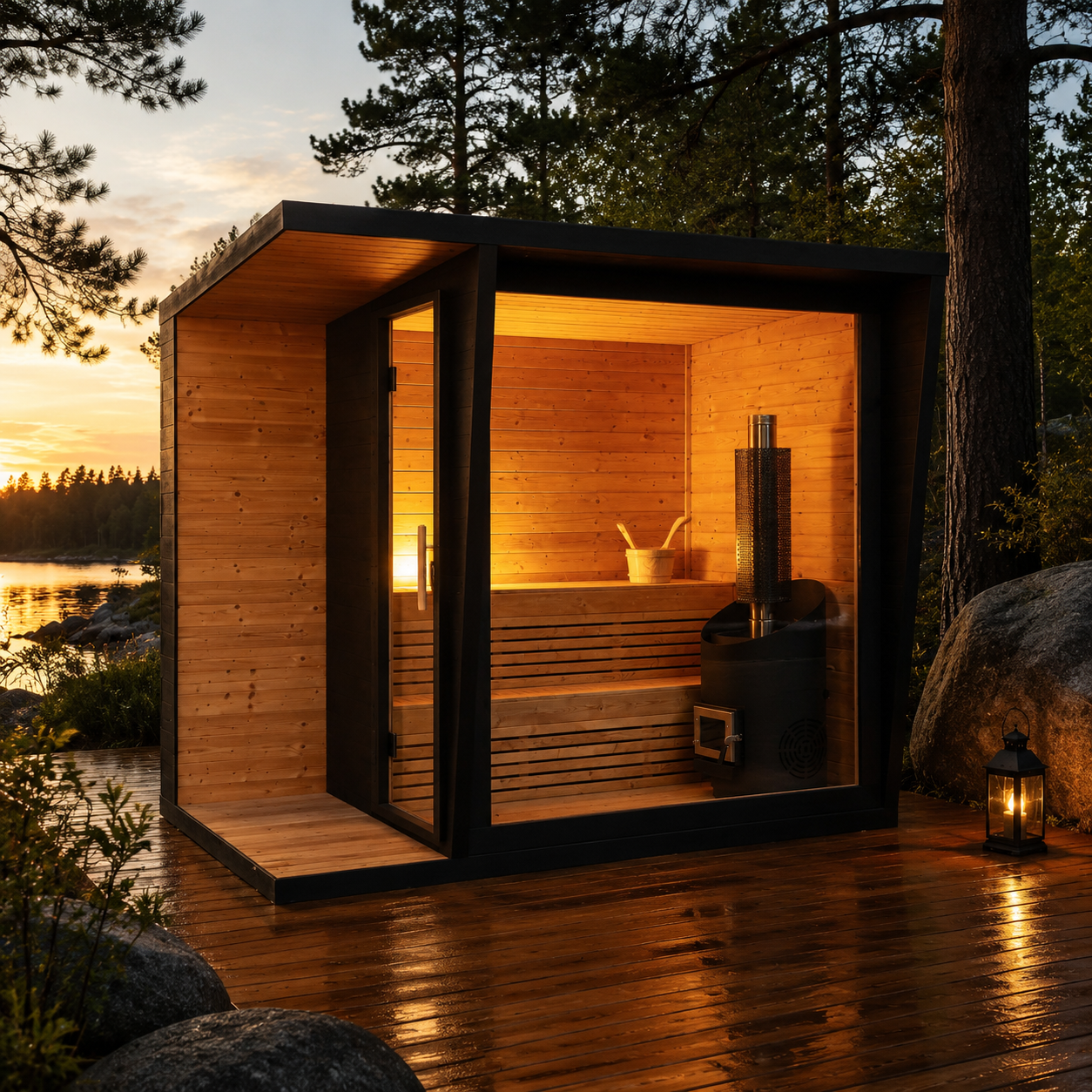
For an outdoor product, ask how the roof, weatherproofing fabric, exterior finish and drainage interfaces are supplied. Establish whether roof materials are standard, optional or site-supplied. A picture of a completed cabin is useful context but does not establish the assembly scope.
If the dealer will show the product, ask for the same information their sales team needs: base preparation, access, heater supply, ventilation and maintenance.
Can the electrical question survive a handoff?
Wholesale buyers often choose a stove after the cabin. The initial quotation should therefore separate the cabin price from the heater option and show which electrical values remain unconfirmed.
When the stove is selected, ask for the model, rated load, voltage, frequency, phase, controls and clearances. The dealer should not rely on a value copied from another market’s installation.
Is packing consistent across repeat orders?
Request package data for the exact model and size, plus the carton count and gross weight. Ask whether a repeat order uses the same packaging design and whether packaging branding can be controlled for private label.
Freight planning needs repeatability too. A dealer reselling several rooms should know how package count, volume and loading assumptions change when quantities or models are mixed.
What dealer support is documented?
Ask for the product images, specification links, manuals, accessory lists, installation questions and after-sales contact that the dealer will receive. Define which language and branding changes are available and who approves them.
Do not assume a warehouse, local installation network or DDP service exists in every market. Ask for the confirmed destination scope.
Which evidence must travel with the product?
If the destination requires certificates, test reports, labels or manual wording, name them before the wholesale order. Request current files tied to the exact product family and market. A brochure badge is not a substitute for a product-specific record.
Does the commercial model support comparison?
Ask for MOQ by configuration, product price, optional equipment, freight and destination charges. Clarify payment milestones, quotation validity, sample terms and the cost of changes after approval.
The supplied catalogue lists FOB Ningbo mainly, 25–30 days typical production and one-month quotation validity; these values still need confirmation on the current order and destination.
A repeat-order test
Send the supplier the same short brief twice, with the same SKU, size, timber, stove and destination. Compare whether the specification, inclusions, packing data and commercial basis remain consistent. The answer reveals more about wholesale readiness than a longer sales presentation.
 微信 WeChatScan to add us